#BlogElul 11: Count

#BlogElul 2013Sometimes counting is straightforward.

  • How many places do we need to set at the table?
  • How much brisket should we cook?
  • How many pounds of apples will we slice?

Sometimes counting defies simple arithmetical calculations.

  • How many times have I missed the mark?
  • How much more could I have done as a friend… a wife… a daughter… a sister… a Jew?
  • How many times will I choose to open my heart rather than harden it?

Cheshbon hanefesh, an accounting of the soul, is not nearly as clear-cut as the problem sets I used to churn through in math or physics. I can’t write a few lines of code to speed up the tallying. It’s hard work, this inventory of deeds done and undone and not done quite as they ought have been, and a knack for numbers isn’t much help.

Does effort count? I certainly hope so.


#BlogElul, the brainchild of Rabbi Phyllis Sommer, invites participants to chronicle the month leading up to the Jewish High Holy Days through blog posts, photos, and other social media expressions.

#BlogElul 10: See

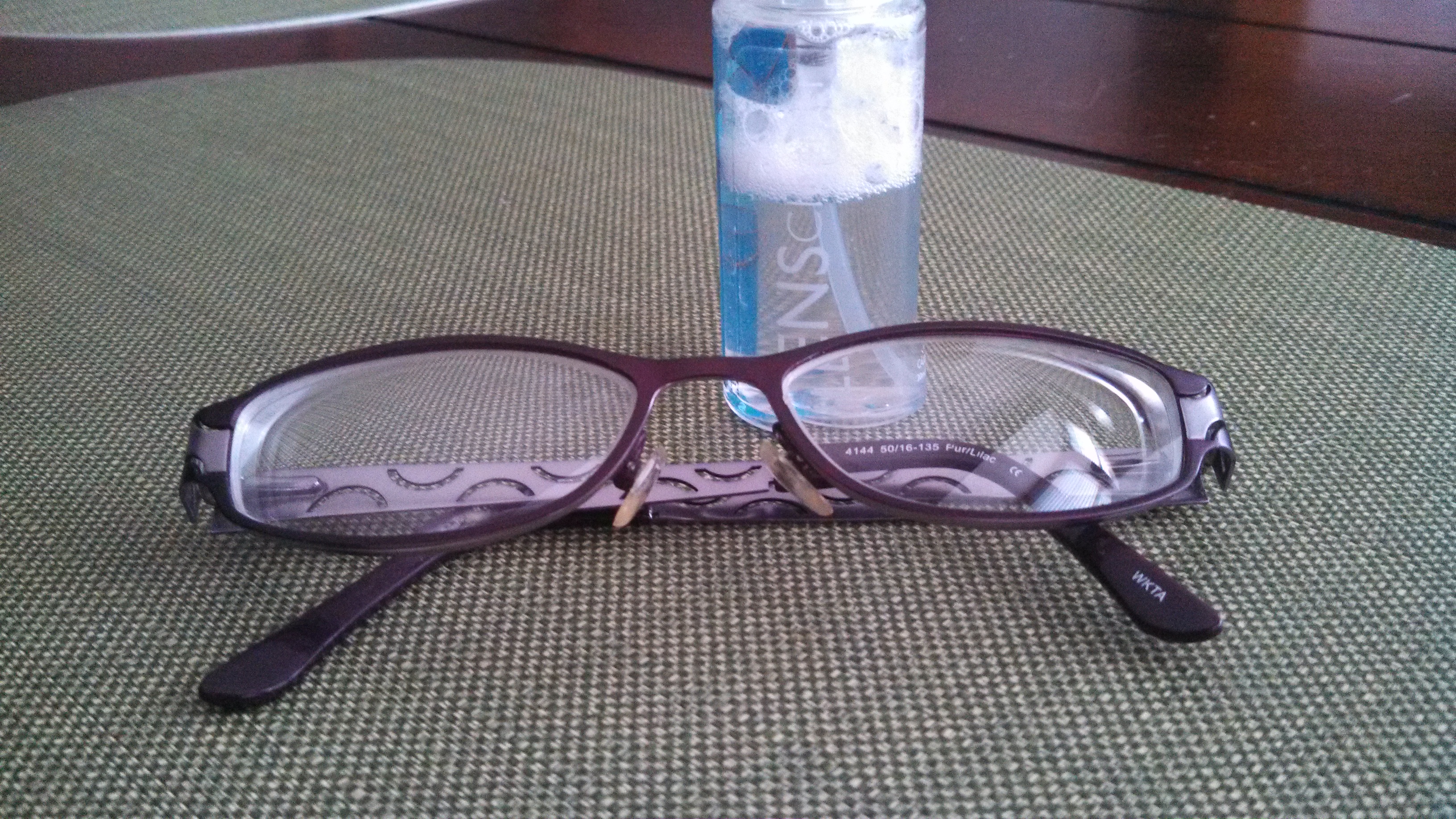
#BlogElul 2013In addition to my mother’s fair skin and love for the written word, I inherited her nearsightedness. I have worn corrective lenses in some form for most of my life. The first thing I do when I wake up in the morning is fumble for my glasses. If I can’t lay hands on them immediately, I can make out nothing but fuzzy shapes and colors. Without a lens bending the light coming into my pupil, my ability to resolve my surroundings into sharp focus is limited to no more than six inches in front of my face.

Sometimes my glasses get dirty without my notice. Since it happens so gradually, only when I recall that it’s been a while since I busted out the little microfiber cleaning cloth do I realize that I have had a smudgy, smeary barrier between myself and the world around me for who knows how long. It’s something of a shock to put on my newly de-fingerprinted glasses and see how much clearer my view is, considering that I hadn’t even noticed that they were dirty in the first place.

I think we all have a spiritual lens through which we look at the world. Mine is a Jewish lens; others may have Christian or Buddhist or Muslim or Wiccan lenses through which they seek a clear view of that which gives human existence meaning. As we go through life, I think these “lenses” can get smudged by the day-to-day crud we encounter: cynicism, disappointment, a painful news story, casual unkindness. Eventually, that crud will distort the picture we see of the universe and our place in it.

Glasses

What smudges are between you and a clear view of the world?

For Jews, the month of Elul is a time to prepare for the fresh start of the New Year and the Day of Atonement. Just as we might wipe off our eyeglasses before we expect to see a particularly important or beautiful sight, we ought to take time to ensure that there is nothing gunking up our spiritual lenses and preventing the clearest possible view of the supernal light.


#BlogElul, the brainchild of Rabbi Phyllis Sommer, invites participants to chronicle the month leading up to the Jewish High Holy Days through blog posts, photos, and other social media expressions.

#BlogElul 9: Hear

#BlogElul 2013NB: I know it’s not the 9th of Elul. We just got back from visiting family in southwestern Florida, so I have a little catching up to do.

I.

Our nephew just turned three, and among the birthday gifts we brought for him was a new book. I spent a good chunk of our time in southern Florida with a small boy perched on my lap as we paged through the slim, lushly illustrated volume. We must have read it all the way through five times on the first evening alone. The next two days, I could barely gulp down my coffee or snag a bite of bagel in the morning — he wanted to hear the story again, again, again. It didn’t matter that he had practically memorized the words already. He had to hear it.

II.

I know my husband loves me. No matter how deep in my marrow I know it, I still want to hear him say it, to feel his words like a caress.

III.

If I have wronged someone, it doesn’t matter whether that person knows I’m sorry. They still deserve to hear my apology in my own words and voice.

IV.

Hearing the week’s Torah portion being chanted is an entirely different experience than reading it. The sound of the word, not just its dictionary definition, helps illuminate its meaning.

V.

In services, we hear some of the same words and phrases repeated over and over again, and the repetition makes the rhythm that helps us build kavanah, prayerful intention, the right state of mind. All prayer would be silent if hearing were unimportant.


#BlogElul, the brainchild of Rabbi Phyllis Sommer, invites participants to chronicle the month leading up to the Jewish High Holy Days through blog posts, photos, and other social media expressions.
#BlogElul 8: Believe

#BlogElul 2013NB: I know it’s not the 8th of Elul. We just got back from visiting family in southwestern Florida, so I have a little catching up to do.

I already talked a little bit about that troublesome B-word, “believe,” in my second #BlogElul post. When we say today that someone “believes” something, we usually mean that the person has “confidence in the truth, the existence, or the reliability of something.” It’s a purely notional exercise: either we think a thing is true or we don’t.

As someone who grew up in the modern West, science is the primary lens through which I have been trained to view the world. When it comes to chemistry or mathematics or engineering or (my field) computer science, we do not accept as true — believe — a particular concept without first gathering supporting evidence. Every schoolchild learns about the scientific method of developing a hypothesis, testing it against the evidence, and only then deciding whether the evidence verifies the hypothesis.

The problem is that the truths of religion do not necessarily lend themselves to a yes/no, true/false binary. We cannot develop an experiment to determine empirically the veracity of a spiritual insight. And yet, we use language that assumes that religious truths are in the same category as empirical truths. My inner scientist squirms when someone asks me what I believe; I cannot answer that with a list of peer-reviewed facts.

If I had my choice, I would prefer to return to a much earlier understanding of the word “belief.” Our word in English came from a West Germanic word meaning “to hold dear, esteem, trust.” That definition resolves my inner conflict between the scientist who hesitates to make any assertions without hard evidence and the intuitive soul who trusts in the insights of her Jewish tradition.

Rather than asking people what they believe, as if they should be able to produce a list of facts and supporting experimental data, perhaps we should try asking our fellow human beings what they hold dear.


#BlogElul, the brainchild of Rabbi Phyllis Sommer, invites participants to chronicle the month leading up to the Jewish High Holy Days through blog posts, photos, and other social media expressions.

#BlogElul 7: Be

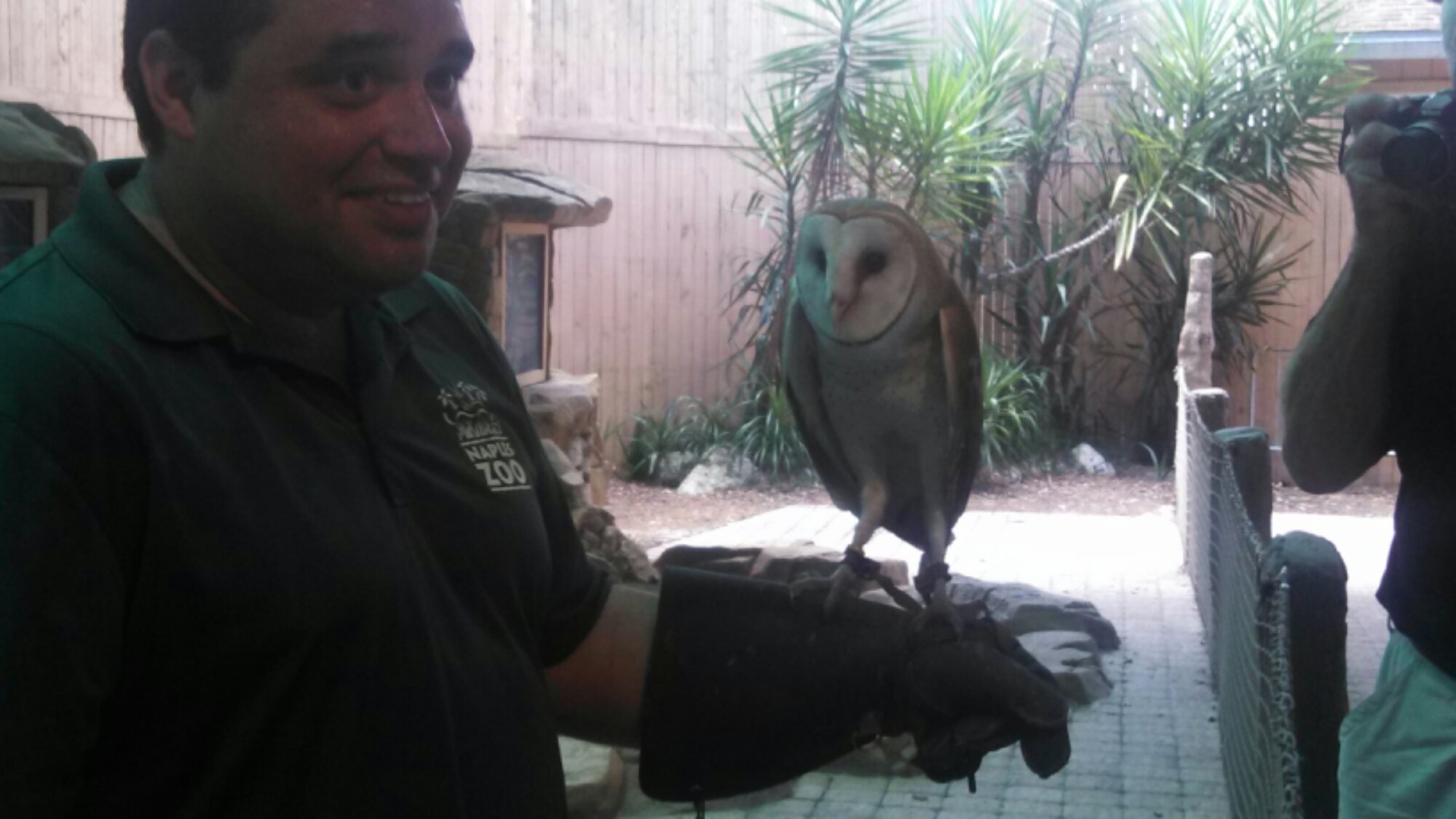
#BlogElul 2013This one is a little late; our nieces and nephew have conspired to keep us away from the computer. It is wonderful. One of the ways they kept us occupied was a visit to the zoo, which reminded me of a passage from Pirke Avot.

Yehuda ben Teima said: Be as bold as a leopard, as light as an eagle, as swift as a gazelle, and as brave as a lion to do the will of your Father in Heaven.

image

Be as bold as a leopard.

image

Be as light as an... owl, in this case.

image

Be as swift as a gazelle.

image

Be as brave as a lion. Hey, even sleepy lions can be brave.


#BlogElul, the brainchild of Rabbi Phyllis Sommer, invites participants to chronicle the month leading up to the Jewish High Holy Days through blog posts, photos, and other social media expressions.