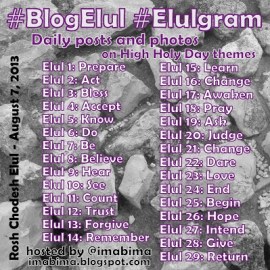
#BlogElul 4: Accept

#BlogElul 2013

I accept that I do not have time to write a lengthy exploration of the fourth daily topic before the sun sets and the Sabbath arrives. I’ll be off the computer and away from the blogosphere, Twitterverse, and Facebook until after sundown on Saturday.

When this post goes live, my husband and I will be welcoming the first Shabbat of the month of Elul together with our community.  With prayer and song, wine cups joyfully lifted, and challah held high by small, slightly sticky children’s hands, we will accept gratefully the gift of rest and renewal bestowed upon our people.

Shabbat Shalom, everyone. May your day be one of peace — no exceptions.


#BlogElul, the brainchild of Rabbi Phyllis Sommer, invites participants to chronicle the month leading up to the Jewish High Holy Days through blog posts, photos, and other social media expressions.

#BlogElul 3: Bless

#BlogElul 2013We Jews say a lot of blessings. Like, a lot a lot. There are blessings for food (several different ones for different categories, both before and after meals), for lighting Shabbat or holiday candles, for hearing thunder, for laying eyes on the sea, for hearing good news, for hearing bad news, for the proper functioning of our bodies after using the bathroom, for seeing a rainbow, for seeing an unusual person, for opening our eyes in the morning. You name it, we probably have a blessing (called a b’rakhah in Hebrew) for it.

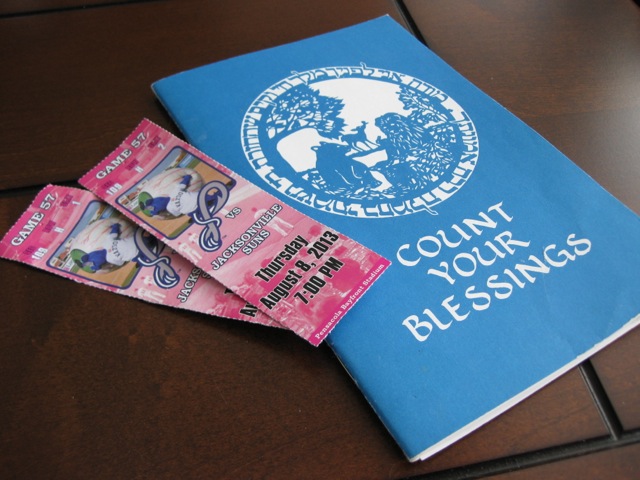
When the sun went down and ushered in the third day of Elul*, I was at a baseball game. Although some fans treat sports with the reverence due a religion (complete with sainted players, demonic forces wearing the uniforms of the opposing team, and “hymns” in the form of stadium rock), I am of the view that a baseball game is a secular event. At first glance, it didn’t look like we were going to be doing anything particularly Jewish that evening.

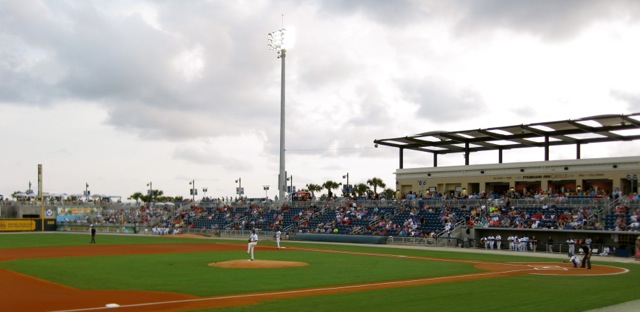
My third #BlogElul post was still unwritten as we headed to Pensacola Bayfront Stadium, so I had blessings on the brain. We have blessings we could say for just about everything, after all, and that ought to mean that any place, even one as secular as a stadium, should provide at least a few b’rakhah prompts. I started to wonder how many opportunities to bless God I could find at a baseball game. Here are just a few of the ones we found as we watched the Pensacola Blue Wahoos beat the Jacksonville Suns.

Practice pitches before the game.

Practice pitches before the game.

  • This was my very first baseball game ever, so we could start strong with the Shehecheyanu, which we say for “firsts” and unique or infrequent joyful occasions.
  • Pensacola Bayfront Stadium isn’t merely a name: we had a great view of the ocean, and the sea breeze helped cool down the summer evening. We got to bless God “who has made the great sea.”
  • What’s a baseball game without a little stadium food? We couldn’t resist a hot, salty soft pretzel. There is apparently some debate over whether a soft pretzel gets the b’rakhah for bread or the one for other grain foods, but either way, it was a blessing opportunity.
  • While we’re on the subject of food and drink, it was apparently “Thirsty Thursday” at the ballpark, which brought the price of a tall, frosty beer down to something reasonable. We blessed God, “at whose word all things come into being,” and settled in for a relaxing game.
  • When the clouds started rolling in, I was concerned that we would soon be saying the blessings for seeing lightning or hearing thunder. The weather held pleasant, though, which ought to call for a blessing in and of itself.
B'rakhot and ballgames. Who would have thought?

B’rakhot and ballgames.

My little experiment turned out to be an eye-opening mindfulness exercise. By deliberately searching for opportunities to say blessings, I gained intimations of the divine in an unexpected place. Perhaps that is why we have blessings for just about everything, from the obviously transcendent to the seemingly mundane: sparks of the holy are all around us — even out at the ballgame — if only we remember to step outside of ourselves for a few seconds to acknowledge their Source.

* In the Jewish reckoning of time, days begin and end at sunset, an echo of the world’s creation as described in Bere’shit, or Genesis: “And there was evening and there was morning, a first day.” As something of a night owl, given my druthers, this has always struck me as the sensible way to set things up.


#BlogElul, the brainchild of Rabbi Phyllis Sommer, invites participants to chronicle the month leading up to the Jewish High Holy Days through blog posts, photos, and other social media expressions.

#BlogElul 2: Act

#BlogElul 2013I find it appropriate that in the list of topics for this year’s #BlogElul project, “Act” precedes “Believe.”

What people think about that which one science fiction author dubbed “Life, the Universe, and Everything” is enthralling, I will readily admit. A fascination with the glittering variety of belief systems to which human beings have ascribed in different times and places is one of the things that first drew me to the academic study of religion in college. I can (and did) while away many an intellectually stimulating hour in gleeful discussion and debate over theology, all the juicy details and bizarre minutiae and sweeping emotions and contradictions that coalesce into our thoughts about God.

It’s fun for a religion geek like me to talk about beliefs. It would be foolish — perhaps even dangerous — of me to declare “belief” the defining aspect of a religious life.

The temptation to reduce religion to the acceptance of a certain set of statements about the nature of the divine is there, no question. Even the language we often use to discuss religion bears the mark of our preoccupation with what we think about God rather than how we behave. As Karen Armstrong notes in The Case for God, “today we often speak of religious people as ‘believers,’ as though accepting orthodox dogma ‘on faith’ were their most important activity.”

Those “I believe” declarations, no matter how interesting they are or how satisfying they might feel to formulate, may serve only to obfuscate the critical issue: how do we behave toward others? Toward the capital-‘O’ Other? Is it more important that I affirm in my mind, I believe God calls us to pursue justice, or that I behave justly? Does it matter that I think compassion is a divine ideal if I fail to act compassionately? Without actions to reify the beliefs we seem to enjoy discussing so much, religion becomes an empty intellectual exercise, idle speculation that accomplishes nothing and helps no one beyond providing an entertaining mental diversion.

As we approach the Days of Awe, I must ask myself whether my actions are worthy of the beliefs I claim to hold dear. None of the things I “intend,” “hope,” or “believe” will do me or the universe I share with all of you a bit of good unless I act, here and now, to better myself and to help my fellows. In that way may I serve as a partner to the Holy One in tikkun olam, repairing the world.


#BlogElul, the brainchild of Rabbi Phyllis Sommer, invites participants to chronicle the month leading up to the Jewish High Holy Days through blog posts, photos, and other social media expressions.

#BlogElul 1: Prepare

#BlogElul 2013When the Navy moved us to Pensacola this past spring, we did not delay in lining up our families to visit us in sunny Florida. Sampson’s parents mentioned that they might like to join us for Rosh Hashanah, to which we said, “Great! We can’t wait to see you,” and promptly went back to taking care of little details like finding a house, unpacking our worldly possessions from a bewildering array of cardboard boxes and crumpled newsprint, and getting Sampson in the cockpit of a completely new airplane so he could start introducing impossibly young, bright-eyed, fresh-out-of-college Student Naval Flight Officers to the world of military aviation.

The High Holy Days seemed a long way off, and continued to seem so as spring turned into summer and we got to know the folks at our new synagogue — including a handful of other military Jews! Most of them were just starting flight school. Talking with them brought us right back to our own days as a newlywed military couple trying to balance Jewish life with the demands of the Navy. We remembered one of Sampson’s (very) few Jewish superior officers in Kingsville and his family, who welcomed us into their home when we were far from our own. We had always said that one day, we would do the same for other young Jewish servicemembers.

Never mind that in our six and a half years of marriage, not once had we hosted a major holiday dinner. Whether we took leave to visit relatives in Northern Virginia, accepted the gracious invitation of the Jewish Marine major in South Texas, or lit yom tov candles for a just-the-two-of-us meal before dashing to shul in Norfolk, we never found ourselves in the position of providing the warmth, hospitality, and especially the mouthwatering food that evokes holiday feeling almost by magic when its aroma fills the air and the first forkful hits the taste buds.

Inexperience was no object in my eagerness to shed the role of the perma-guest and finally don my best hostess-ing smile. Our opportunity to pay forward the hospitality of that Marine major and his family had arrived: after Shabbat services one evening, I blithely issued invitations to the Jewish servicemembers who didn’t have a place for the holiday dinner, and our Erev Rosh Hashanah guest list grew to include friends as well as in-laws.

Then I went home and looked at our table.
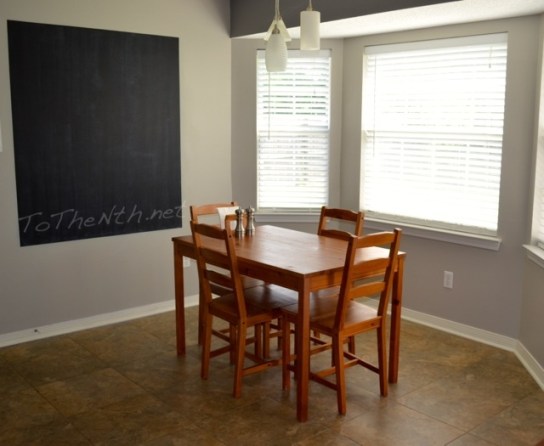
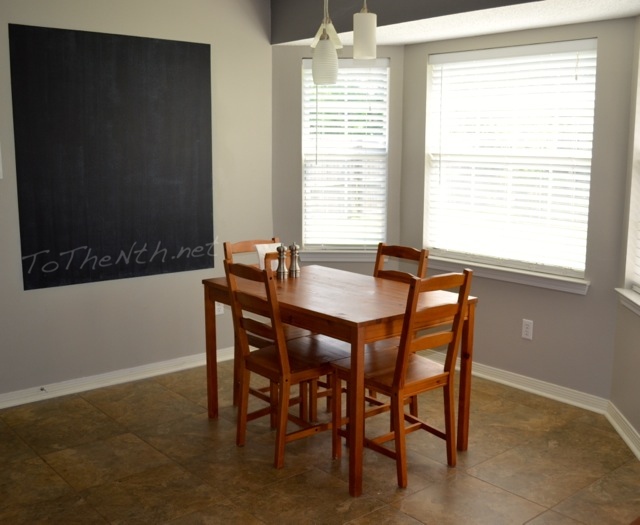
Little Table

Everyone will be cool with sharing seats, right?

I’m all for feelings of holiday closeness, but not when they arise from inadvertent elbow-jabs courtesy of the neighbor with whom you’re perched on half a seat whilst attempting not to spill your soup. How cozy!

Our tiny table had been marvelous for the past six years and several PCSes, largely because it’s hard to get overly upset when the movers gouge, ding, and otherwise beat up something that came cheap, flat-packed, and bearing a quasi-Swedish name. Unless we wanted our Rosh Hashanah guests to eat their brisket standing up, however, it was clear that the time had come for a real, grown-up dining table. We found one we liked at a real, grown-up furniture store, and plunked down real, grown-up money to have it delivered just in time for the beginning of Elul — today, in fact.
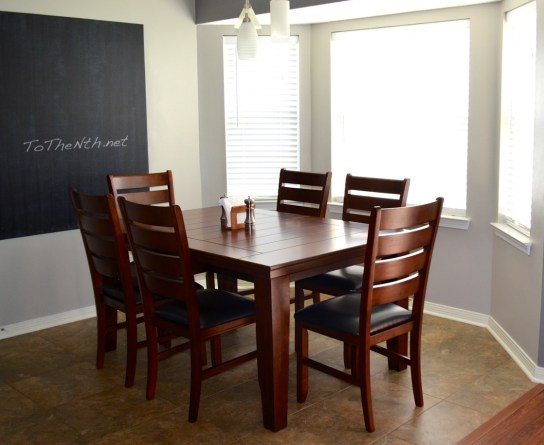
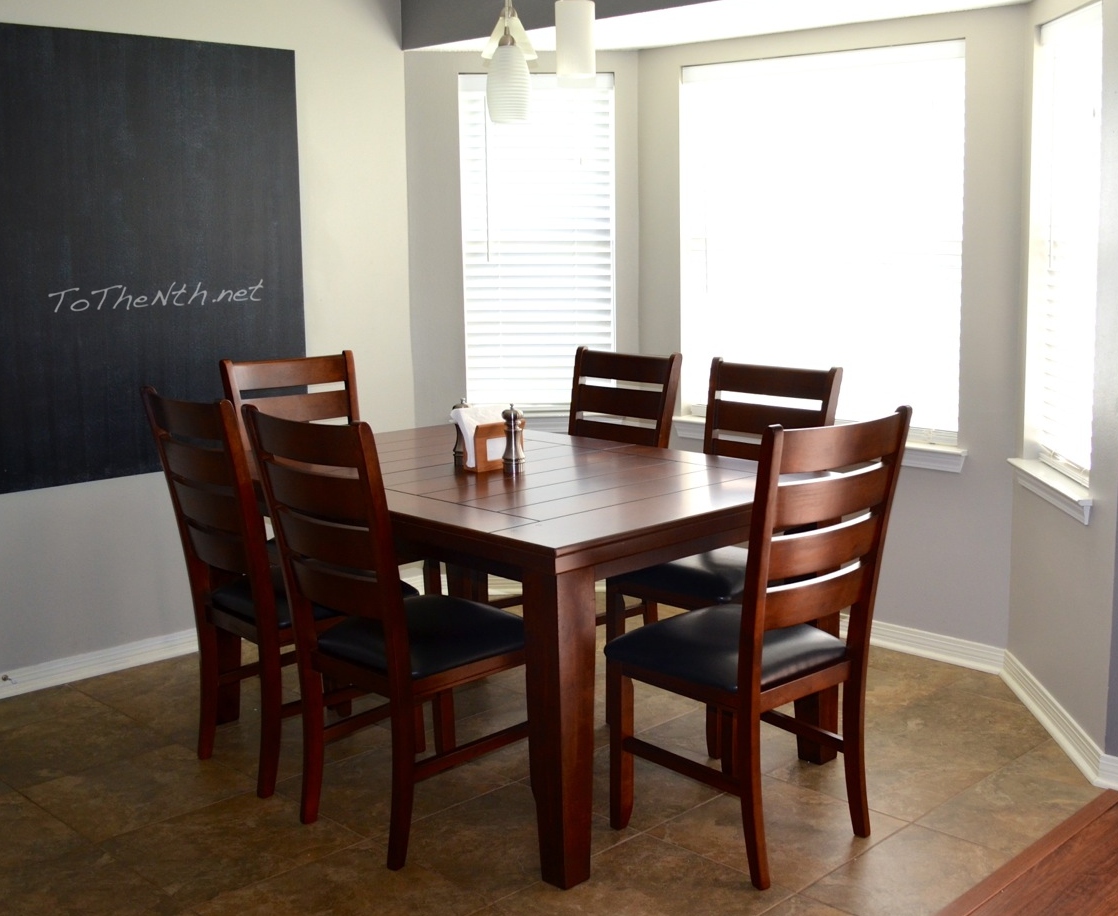
New Table

When we insert the leaf, the new table will provide 255% the surface area of the old and seat at least eight.

At first glance, furniture might seem to have little to do with the coming days of reflection, prayer, and t’shuvah. When I look at our new table, though, I see a commitment to the mitzvah of hospitality. I see us welcoming family and friends to eat and be satisfied, and to taste together the sweetness of the New Year in crisp apples and golden honey. I see where we will bless the Creator of the fruit of the vine and the One who brings forth bread from the earth. I see the center of a Jewish home, of a Jewish life — the life toward which we strive through the less visible work of our hearts during this season.

Even with a full cycle of the moon’s waxing and waning — four whole weeks — I may not achieve that elusive feeling of complete preparedness for the intensity of the autumn holidays, but you can bet I’m going to try. If nothing else, at least I know that everyone will have a place to sit.


#BlogElul, the brainchild of Rabbi Phyllis Sommer, invites participants to chronicle the month leading up to the Jewish High Holy Days through blog posts, photos, and other social media expressions.